Sustainable Food Packaging Solutions USA: Smart Eco Guide
Sustainable food packaging solutions USA help brands cut waste, lower costs, and meet eco-friendly consumer demand with smarter packaging choices.
Sustainable food packaging solutions USA are helping restaurants, food brands, and retailers reduce waste while meeting growing consumer demand for eco-friendly products. From compostable containers to recyclable mailers, businesses across America are switching to smarter packaging that protects food, supports the environment, and strengthens brand trust.
Sustainable Food Packaging Solutions USA 🌱
Have you ever wondered why so many U.S. food brands are replacing plastic containers with paper bowls, compostable wraps, and plant-based packaging? The answer is simple. Customers now care deeply about sustainability, and businesses that ignore this shift risk losing sales and trust.
Today, sustainable food packaging is no longer a trend. It has become a smart business strategy. Companies across the United States are investing in greener packaging to reduce waste, improve brand image, and follow stricter environmental regulations. Whether you run a restaurant, café, bakery, meal delivery service, or food manufacturing business, choosing eco-friendly packaging can create long-term benefits for both your customers and the planet. 🌎
Why Sustainable Food Packaging Matters In The USA ♻️
Food packaging protects products, keeps meals fresh, and supports safe transportation. However, traditional plastic packaging creates major environmental problems. Millions of tons of plastic waste end up in landfills and oceans every year.
American consumers are becoming more eco-conscious. Many shoppers now prefer brands that use recyclable or compostable materials. This shift is pushing food businesses to adopt sustainable packaging solutions faster than ever before.
Sustainable packaging also supports corporate responsibility goals. Companies that reduce packaging waste often improve customer loyalty and attract environmentally aware buyers. In many industries, sustainability now influences purchasing decisions just as much as price and quality.
What Makes Packaging Sustainable? 🌿
Sustainable packaging uses materials and processes that reduce environmental harm. The goal is to minimize waste, conserve resources, and lower carbon emissions during production and disposal.
Several features define eco-friendly food packaging:
- Recyclable materials
- Compostable components
- Biodegradable packaging
- Renewable raw materials
- Minimal plastic usage
- Lower energy production methods
Businesses should also consider packaging durability and transportation efficiency. Lightweight packaging reduces shipping costs and carbon emissions while still protecting food quality.
Common Sustainable Packaging Materials
| Material | Main Benefit | Common Uses |
| Kraft Paper | Recyclable and renewable | Bags, wraps, boxes |
| PLA Bioplastic | Compostable | Cups, utensils |
| Sugarcane Fiber | Durable and compostable | Plates, bowls |
| Bamboo | Fast-growing resource | Cutlery, trays |
| Recycled Cardboard | Reduces landfill waste | Shipping boxes |
Growing Demand For Eco-Friendly Food Packaging 📦
The U.S. sustainable packaging market continues to grow rapidly. Consumers now expect businesses to make environmentally responsible choices. This demand is especially strong among younger shoppers.
Restaurants and delivery services are under pressure to reduce single-use plastic waste. Many states and cities now restrict foam containers and plastic bags. As a result, businesses are actively searching for greener alternatives.
Food delivery apps have also increased the need for durable yet sustainable packaging. Brands need containers that prevent leaks, maintain freshness, and remain environmentally friendly at the same time.
Benefits Of Sustainable Food Packaging For Businesses 💼
Switching to sustainable food packaging offers more than environmental benefits. It can also improve profitability and customer satisfaction.
Many consumers are willing to pay more for eco-friendly products. Sustainable packaging helps brands stand out in crowded markets and creates a positive brand image.
Here are several key advantages:
- Builds customer trust
- Reduces environmental impact
- Supports legal compliance
- Enhances brand reputation
- Attracts eco-conscious consumers
- Reduces long-term waste management costs
Businesses that adopt green packaging early often gain a competitive advantage. Customers remember brands that care about sustainability. 😊
Compostable Packaging Solutions In America 🍃
Compostable packaging breaks down naturally under composting conditions. Unlike regular plastics, these materials return to the environment without leaving harmful residue.
Popular compostable packaging options include:
- Sugarcane bagasse containers
- Cornstarch cups
- PLA lids
- Compostable sandwich wraps
- Fiber bowls and trays
Many restaurants now use compostable takeout containers to replace foam products. These alternatives help businesses reduce landfill waste while appealing to environmentally conscious customers.
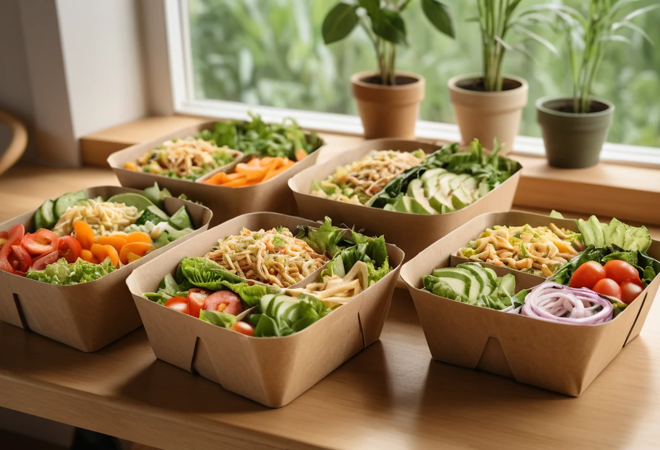
Compostable packaging works especially well for cafés, salad shops, bakeries, and meal prep companies.
Recyclable Food Packaging Options ♻️
Recyclable packaging remains one of the most practical sustainability solutions. Materials like cardboard, paper, aluminum, and certain plastics can be reused multiple times.
Recycling helps reduce raw material consumption and lowers landfill pressure. It also supports circular economy practices where materials stay in use longer.
However, packaging design matters. Mixed materials can make recycling difficult. Businesses should use simple, clearly labeled packaging whenever possible.
Recyclable Packaging Comparison
| Packaging Type | Recyclability | Best Use |
| Cardboard Boxes | High | Food shipping |
| Aluminum Containers | High | Hot meals |
| PET Plastic Bottles | Moderate | Beverages |
| Paper Bags | High | Bakery and takeout |
| Wax-Coated Paper | Limited | Specialty foods |
Biodegradable Packaging Vs Compostable Packaging 🤔
Many people confuse biodegradable and compostable packaging. While both break down over time, they are not identical.
Biodegradable materials decompose naturally, but the process may take years. Some biodegradable products also leave behind microplastics.
Compostable packaging breaks down into nutrient-rich material under controlled composting conditions. It usually decomposes faster and leaves fewer harmful residues.
Businesses should carefully review packaging certifications before making purchasing decisions. Clear labeling improves customer understanding and disposal behavior.
Sustainable Packaging Trends In The U.S. Market 📈
The American food packaging industry is evolving quickly. Brands are investing in innovative materials and smarter designs to meet sustainability goals.
Several trends are shaping the future:
- Plant-based packaging materials
- Minimalist packaging designs
- Refillable food containers
- Water-based ink printing
- Smart packaging technology
- Reusable delivery packaging
Consumers also appreciate transparency. Many brands now print sustainability messages directly on packaging to educate buyers about recycling or composting methods.
Challenges Businesses Face With Green Packaging ⚠️
Although sustainable packaging offers many benefits, businesses still face several challenges during the transition.
Cost is one of the biggest concerns. Eco-friendly packaging can sometimes cost more than traditional plastic alternatives. Small businesses may struggle with upfront expenses.
Supply chain limitations also create difficulties. Some sustainable materials are harder to source consistently. In addition, composting infrastructure varies across U.S. cities and states.
Despite these issues, packaging technology continues to improve. As demand grows, prices are slowly becoming more affordable.
Best Sustainable Packaging Choices For Restaurants 🍽️
Restaurants are among the biggest users of disposable food packaging. Choosing sustainable alternatives can significantly reduce environmental impact.
The best packaging depends on the food type, transportation needs, and storage conditions. Durable containers help prevent spills while maintaining food quality.
Popular restaurant packaging options include:
- Compostable clamshell containers
- Paper soup cups
- Recyclable pizza boxes
- Bamboo cutlery
- Fiber drink carriers
Customers increasingly notice these small details. Eco-friendly packaging can improve dining experiences and encourage repeat business.
Ideal Packaging By Food Business Type
| Business Type | Recommended Packaging |
|—|—|—|
| Coffee Shops | Compostable cups and lids |
| Bakeries | Kraft paper bags |
| Meal Delivery Services | Recyclable insulated boxes |
| Fast Food Restaurants | Fiber containers |
| Grocery Stores | Reusable produce bags |
How Sustainable Packaging Supports Brand Identity 🌟
Packaging represents a brand’s values. Sustainable materials send a clear message that a business cares about environmental responsibility.
Modern consumers often connect eco-friendly packaging with higher product quality. Green packaging can create emotional connections and strengthen customer loyalty.
Brands can also use packaging to tell their sustainability story. Simple printed messages, eco-certifications, and recycling instructions help customers feel involved in positive environmental action.
A memorable unboxing experience can also improve social media visibility. Customers love sharing attractive eco-friendly packaging online. 📱
Government Regulations Affecting Food Packaging In The USA 🏛️
Many U.S. states are introducing stricter packaging laws to reduce plastic pollution. Businesses must stay updated to remain compliant.
Some cities ban foam containers or require recyclable materials for food service operations. Extended Producer Responsibility laws are also gaining attention across the country.
Companies that switch to sustainable packaging early can avoid future compliance problems. Proactive planning often saves money and protects brand reputation over time.
Businesses should regularly review local regulations to ensure packaging meets current standards.
Sustainable Packaging For Food Delivery Services 🚚
Food delivery continues to grow across the United States. However, delivery packaging creates significant waste if businesses rely heavily on single-use plastics.
Sustainable delivery packaging focuses on insulation, leak prevention, and durability while remaining recyclable or compostable.
Key packaging features include:
- Tamper-resistant seals
- Heat retention
- Moisture resistance
- Lightweight construction
- Eco-friendly disposal options
Meal delivery companies that prioritize sustainability often attract environmentally aware consumers who value responsible business practices.
How Consumers Influence Sustainable Packaging Decisions 🛍️
Consumer behavior now drives many packaging decisions. Buyers actively research brands before making purchases.
Studies show many Americans prefer sustainable packaging even if products cost slightly more. Customers also reward transparent companies that openly discuss sustainability goals.
Social media has amplified environmental awareness. Viral conversations about plastic pollution push brands toward greener solutions faster than traditional advertising ever could.
Businesses that listen to customer concerns build stronger long-term relationships and improve public trust.
Tips For Choosing The Right Sustainable Packaging ✅
Not all eco-friendly packaging works for every business. Companies should carefully evaluate their operational needs before switching materials.
Consider these important factors:
- Food safety requirements
- Temperature resistance
- Shipping durability
- Local recycling availability
- Composting infrastructure
- Customer expectations
- Budget limitations
Testing packaging before large-scale adoption is essential. Small pilot programs can identify weaknesses and improve customer satisfaction.
Businesses should also work closely with suppliers to understand certifications, disposal instructions, and material sourcing.
Future Of Sustainable Food Packaging In America 🔮
The future of food packaging in the USA looks greener than ever. Innovation continues to create stronger, cheaper, and more environmentally friendly materials.
Scientists are developing packaging made from seaweed, mushrooms, and agricultural waste. These materials could dramatically reduce plastic dependency in the coming years.
Artificial intelligence and smart manufacturing are also improving packaging efficiency. Businesses can now reduce excess materials while maintaining product protection.
As environmental awareness grows, sustainable food packaging will likely become the standard rather than the exception.
Why Businesses Should Act Now 🚀
Waiting too long to adopt sustainable packaging can hurt a brand’s reputation. Customers increasingly expect businesses to prioritize environmental responsibility.
Early adoption provides several advantages:
- Stronger customer loyalty
- Better brand perception
- Competitive market positioning
- Improved regulatory readiness
- Reduced environmental impact
Sustainability is no longer optional for many food businesses. It has become an important part of long-term growth and customer trust.
“Consumers remember brands that align with their values and protect the environment.” 🌱
Conclusion 🏁
Sustainable food packaging solutions USA are transforming the food industry. Businesses across America are replacing wasteful materials with recyclable, compostable, and biodegradable alternatives that better support the environment and customer expectations.
From restaurants and cafés to grocery stores and meal delivery brands, sustainable packaging creates real business advantages. It improves brand image, supports legal compliance, reduces waste, and attracts eco-conscious consumers.
As innovation continues and regulations become stricter, eco-friendly packaging will play an even larger role in the future of food service. Businesses that embrace sustainable solutions today position themselves for stronger customer loyalty and long-term success tomorrow.
FAQs ❓
What Is The Best Eco Food Packaging?
The best eco-friendly food packaging depends on the product and business needs. Compostable fiber containers and recyclable cardboard are popular choices. They reduce waste while keeping food safe and fresh.
Is Compostable Packaging Worth The Cost?
Yes, compostable packaging can improve customer trust and brand image. Many consumers prefer environmentally responsible businesses. Long-term sustainability benefits often outweigh the higher upfront costs.
Can Restaurants Use Plastic-Free Packaging?
Many restaurants now operate successfully with plastic-free packaging. They use paper, bamboo, sugarcane fiber, and compostable materials instead. These options work well for dine-in, takeout, and delivery services.
What Packaging Is Recyclable In The USA?
Common recyclable packaging includes cardboard, aluminum, paper bags, and certain plastics like PET. Local recycling rules may vary by state or city. Clear labeling helps customers recycle properly.
How Does Sustainable Packaging Help Brands?
Sustainable packaging strengthens customer loyalty and improves brand reputation. It shows environmental responsibility and supports modern consumer values. Many shoppers actively choose brands with greener packaging practices.